
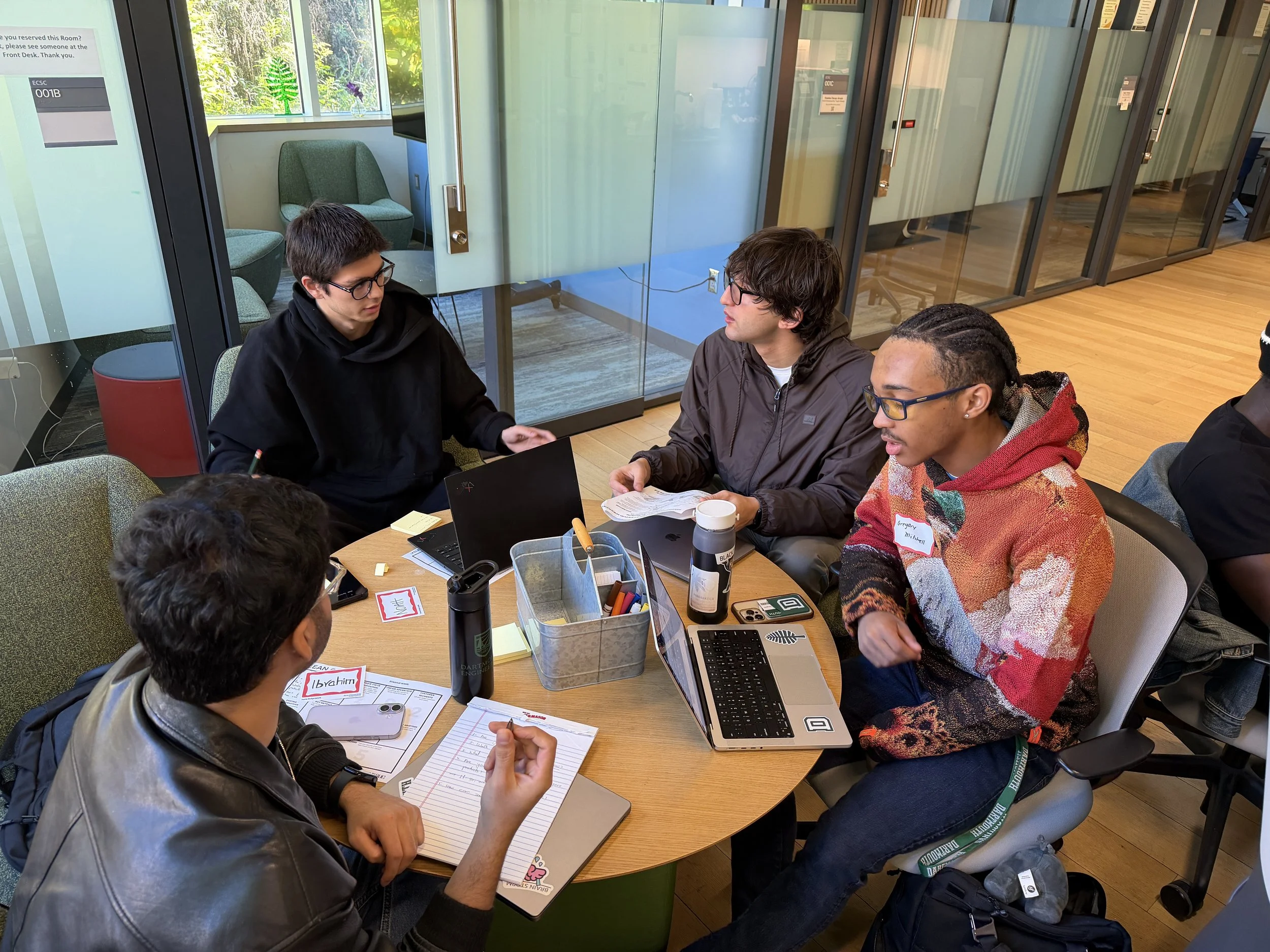
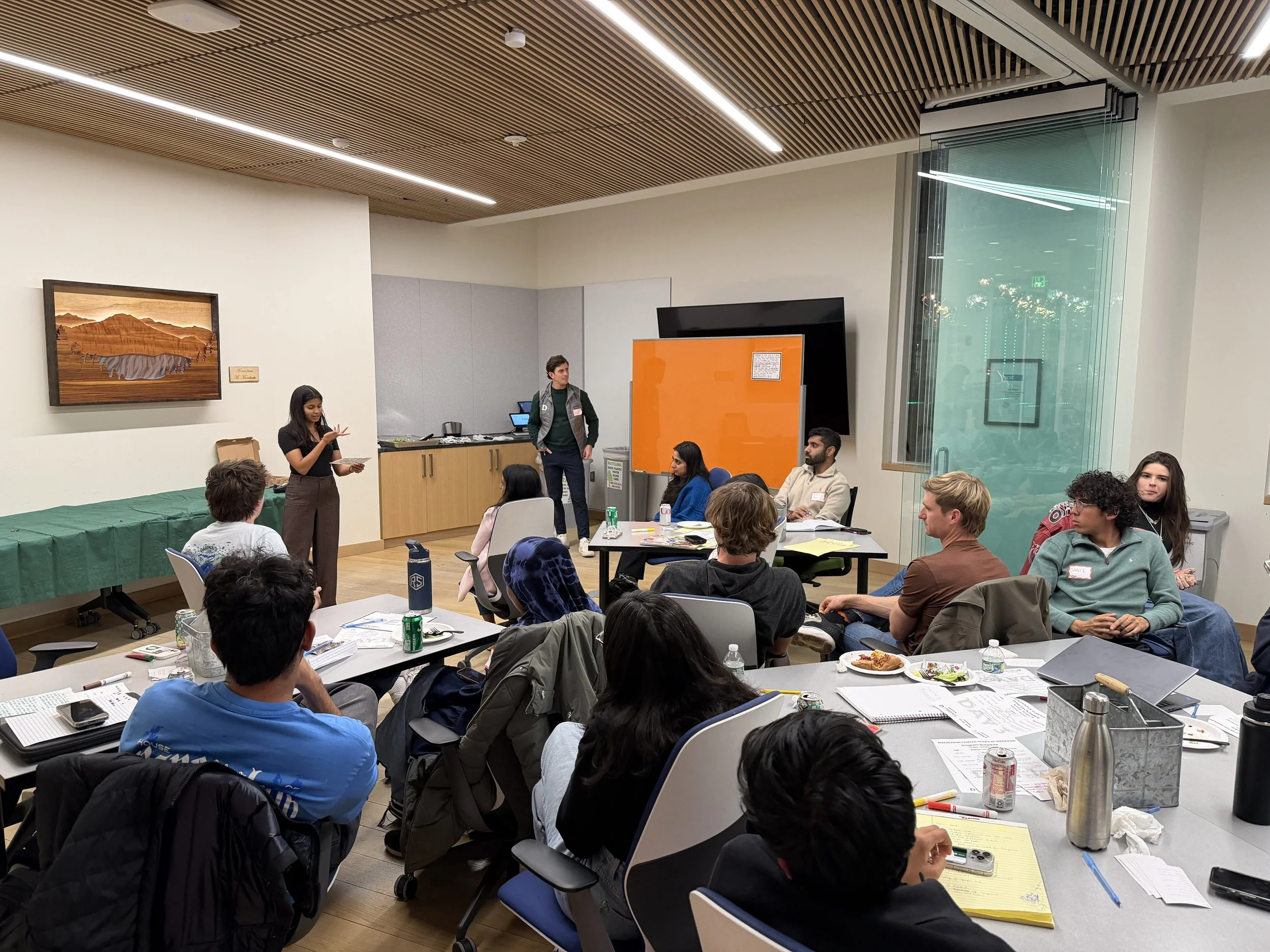
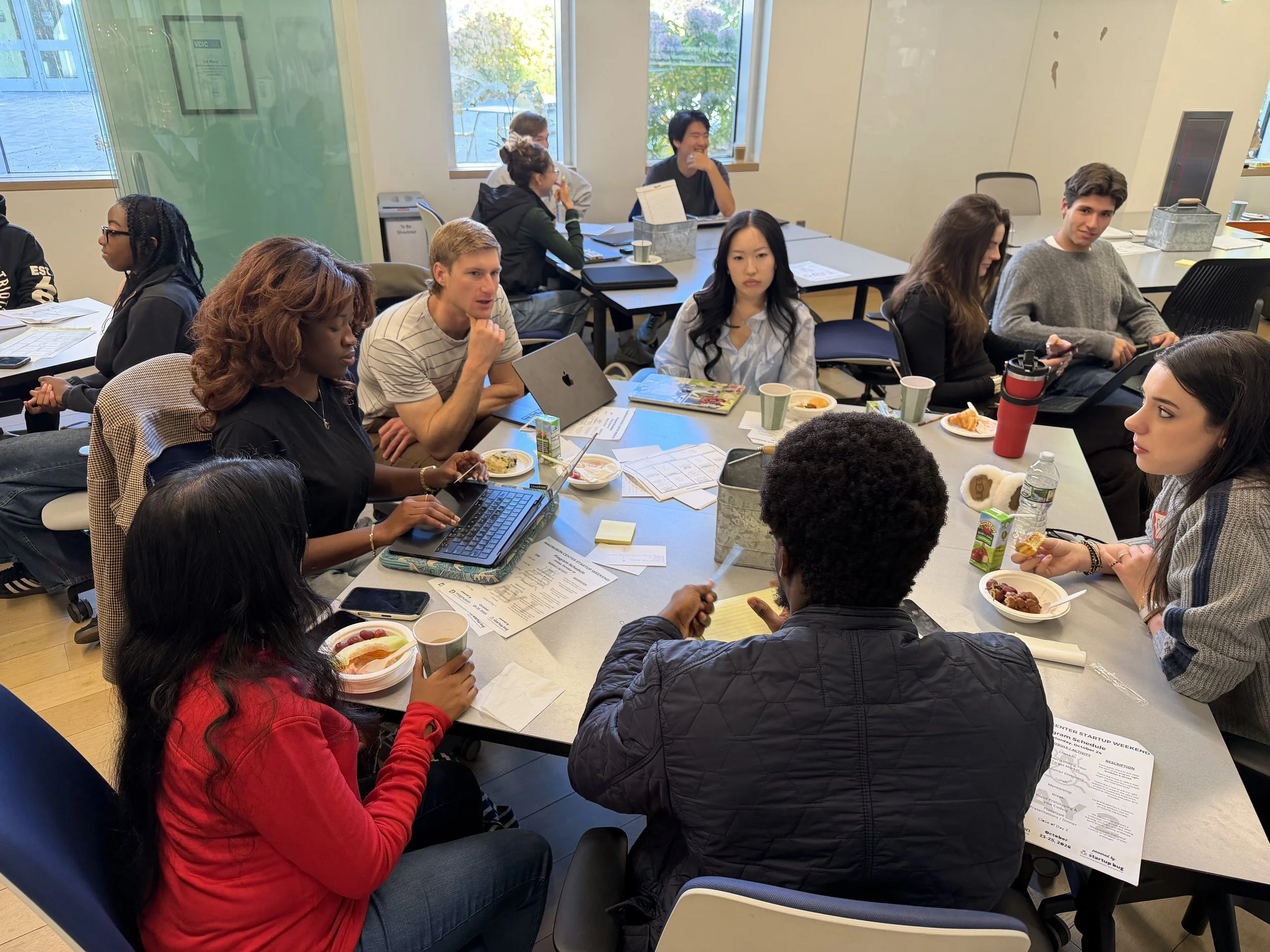
Halfway through the weekend, Muhammad Ibrahim Arif, MEM ‘28, looked around the room and saw what he’d hoped to find. “It’s literally a haven for founders,” he said. Ibrahim had signed up to meet people who think like him. “The Magnuson Center is a centralized place across Dartmouth that brings people of the same mindset into one room.”
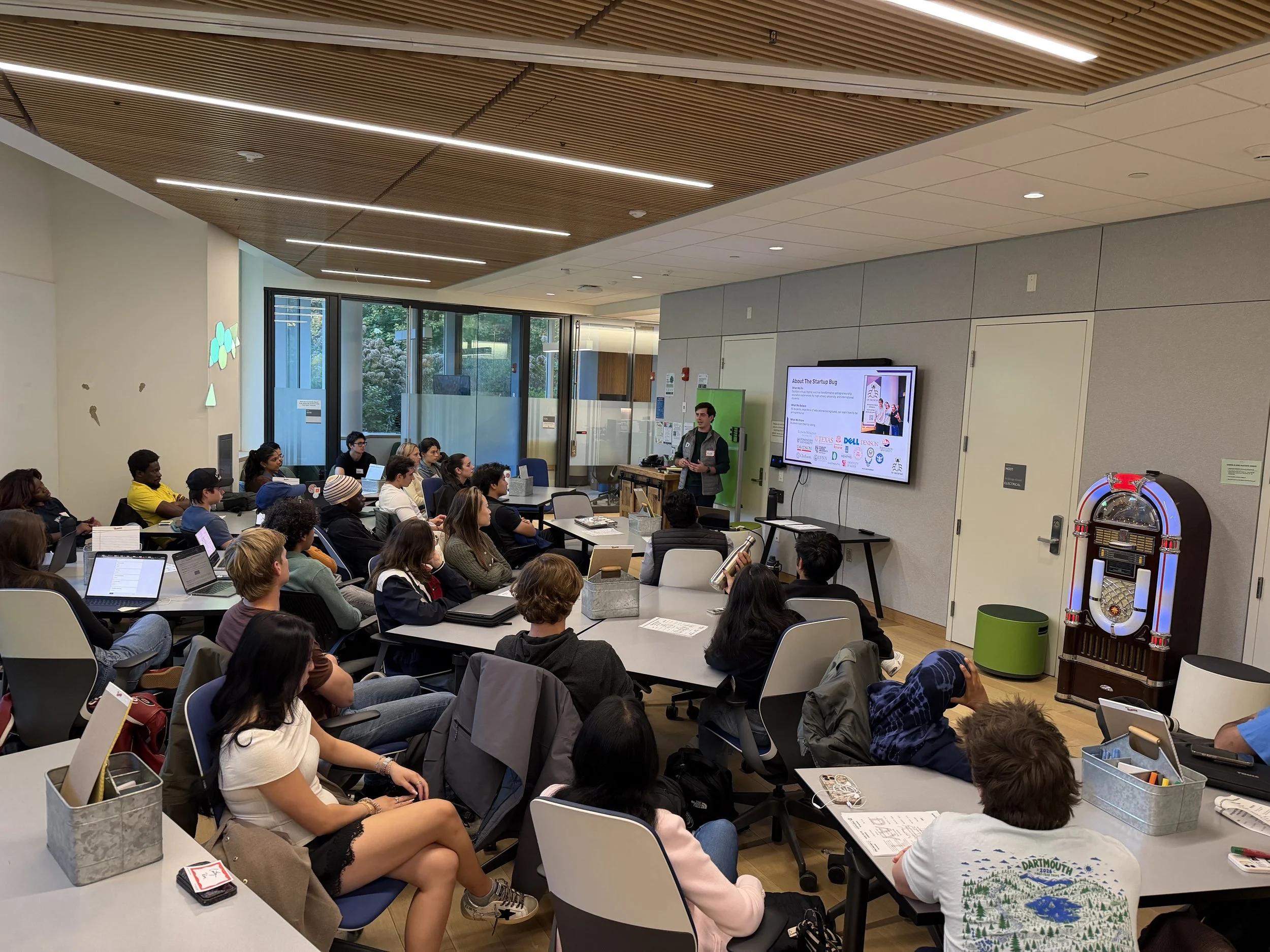
That room held 36 students, from first-year undergraduates to PhD candidates, for Magnuson Center Startup Weekend on October 23-25. The program isn’t designed to produce the next big idea. It’s designed to walk students through what building a company actually involves in the span of a single weekend.
Led by Nick Chagin of The Startup Bug, it’s free, open to every student, and built around doing instead of lecturing. “Students of all backgrounds and levels of experience show up to this program, and we teach you the steps to exploring a business idea,” Chagin says. “It’s practice-heavy, theory-light, and accessible to all students.”
Friday: Start Silly, Start Anywhere
The weekend opened Friday evening with an ideation session known as the “minnow tank” getting students comfortable with pitching ideas by developing ridiculous solutions to trivial problems. “We started with the silliest ideas we could come up with,” says Amisha Pershad, MEM ‘28.
Charlie Lankow ‘28 counts the group brainstorm among his highlights. “Having it be fun makes all the difference,” says Lankow.
After breaking the ice with the minnow tank, some students pitched their own problems and potential solutions in hopes of building a team for the weekend journey. By the end of the night, seven teams had formed around the ideas that stuck.
For many participants, the appeal was the structure. “When you try to think of your startup on your own, you think of a bunch of things all at the same time,” Amisha says. “This structures it a lot for us. It’s kind of like a weekend incubator.”
Saturday: Go Talk to People
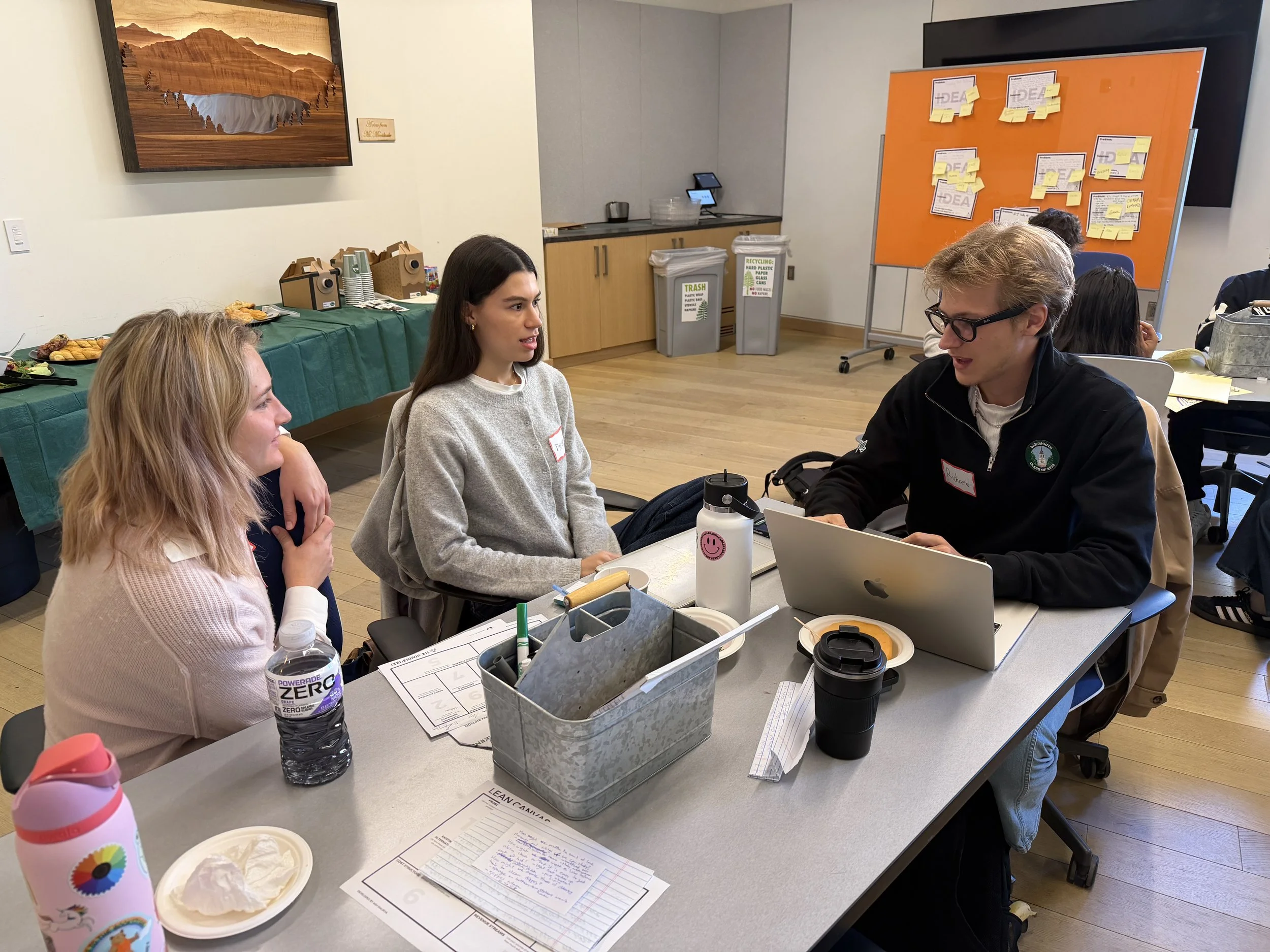
Next came the part many first-time founders skip: asking potential customers what they actually need. Teams were asked to identify their target customers and go out and interview them.
“Talking with customers is very helpful,” Ibrahim says. His team planned to take what they had learned and build a prototype to test whether the core idea held up.
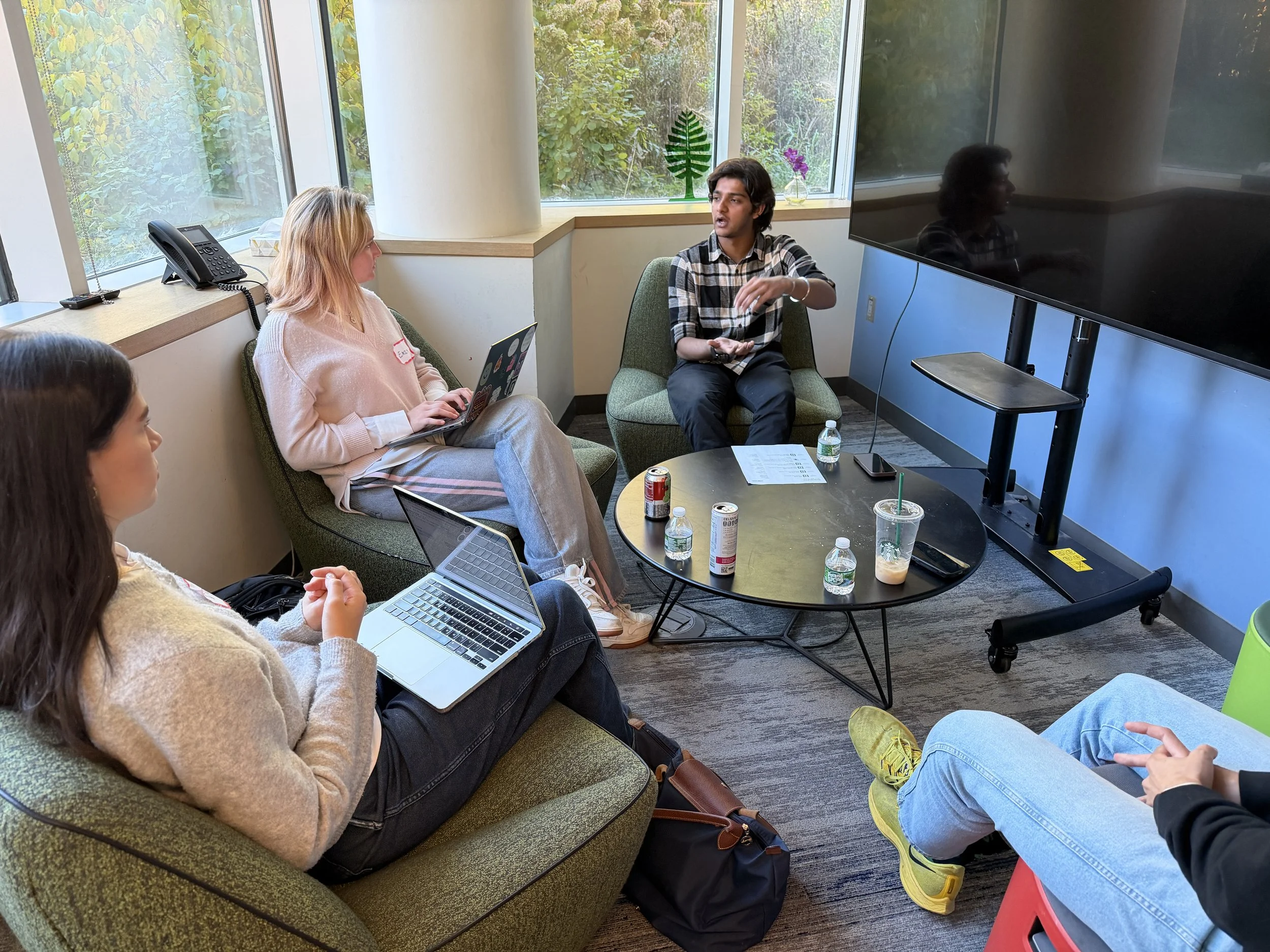
Then came the mentors. Teams rotated through short, rapid-fire sessions with 7 advisors who offered their unique perspectives and insights. “The rapid-fire nature of the mentor conversations was really cool and helpful,” Charlie says. Charlie’s teammate Siqi Ye ‘30 adds, “You get to meet a lot of pretty amazing people.”
For Amisha’s team, the sessions turned up questions they hadn’t thought to ask. A lawyer recommended they look into a provisional patent. “We never even thought about that,” she says. A mentor with health tech experience pushed them to study established competitors and sharpen what made their product different. “We really want to understand the mindset of the people who would be willing to both buy and invest in our business,” Amisha says, “because that’s something we’re still very much learning.”
Ire Seun-Olufemi ‘30 of Akashik, an AI-powered study and knowledge visualization startup, describes the same experience: “You have an idea in your head, but putting it on paper and having it stress-tested by experts, having someone look at your idea and see weaknesses in places you never thought about, is a transformative experience.” Akashik’s co-founders, Ire and Ray Schaffer ‘30, came in with a concept already in motion and used the weekend to pressure-test it.
Sunday: Build It, Then Tell the Story
By Sunday, the work shifted from questions to a working demo and preparations to pitch. Ray’s team spent much of the weekend building their application. “We’re ready to give a good demo, and we have a small pitch deck prepared. We’re really excited,” he said before the afternoon finale, an opportunity for the teams to pitch their ideas to a panel of judges.
In that pitch session, the teams were given just a few minutes to present their work and make a case for the viability of their new ventures. The judges asked questions and offered feedback to challenge the teams’ assumptions and strengthen the ideas.
“I was so impressed with how creative, thoughtful and innovative the students were, and how much they advanced their ideas in one short weekend! The teams were collaborative and presented their projects clearly and convincingly,” says judge Kim Rosenfield, Director of the Dartmouth Technology Transfer Office.
Why It Works
When asked what they would tell a friend about the program, Kristina Petkova ‘30 said simply “Startups for beginners.” Amisha describes it as a “short-term incubator experience, holding your hand through the beginning stages of your startup since getting started is hard.”
Ray had advice for anyone on the fence: “Whether you have an idea or not, if you’re just interested in entrepreneurship, it’s a great weekend to figure out where you fit in the space and find what you love.”
Amisha put the lesson plainly. The weekend is about “getting comfortable with getting started and being okay with scrapping bad ideas.” It’s a skill every founder needs, and one that’s hard to practice anywhere else.
Kwame Owusu Ansah, Assistant Director of Social Entrepreneurship & Innovation at Dartmouth (SEID), met with the teams as a mentor on Saturday and hopes the students leave the weekend feeling inspired: “I encourage all participants to dig deeper and pursue their ideas beyond the weekend, as the real test of whether they've been bitten by the entrepreneurship bug will be how they carry the learnings and feedback from mentors and instructors into their current idea or future startup.”
We’d like to thank the following individuals for being so generous with their time and expertise during this year’s program:
Amelia Looby; Research & Learning Librarian - Business & Economics, Dartmouth Libraries (Guest speaker)
Andy Baer ‘93; Chair, Technology, Privacy and Security practice group, Cozen O'Connor (Mentor)
Caroline Cannon, Tuck '98, Faculty Advisor FYP, Tuck School of Business (Mentor)
Daxay Sanghavi, MEM ‘27 (Mentor)
Darsheel Sanghavi, MEM ‘27 (Mentor)
Kwame Owusu Ansah, Assistant Director, Social Entrepreneurship + Innovation at Dartmouth (Mentor)
Barry Schweitzer, PhD ‘82; Interim Director, Magnuson Center (Mentor)
Sarah Morgan; Senior Program Manager, Experiential Learning, Magnuson Center (Mentor)
Kim Rosenfield, JD; Director, Dartmouth Technology Transfer Office (Judge)
Jonathan Beckwith; Principal / Owner, DFD Solutions (Judge)
Thanks again to Nick Chagin and The Startup Bug for facilitating the weekend, and to all the students who committed a weekend to the experience and stuck with it through the final pitches!